
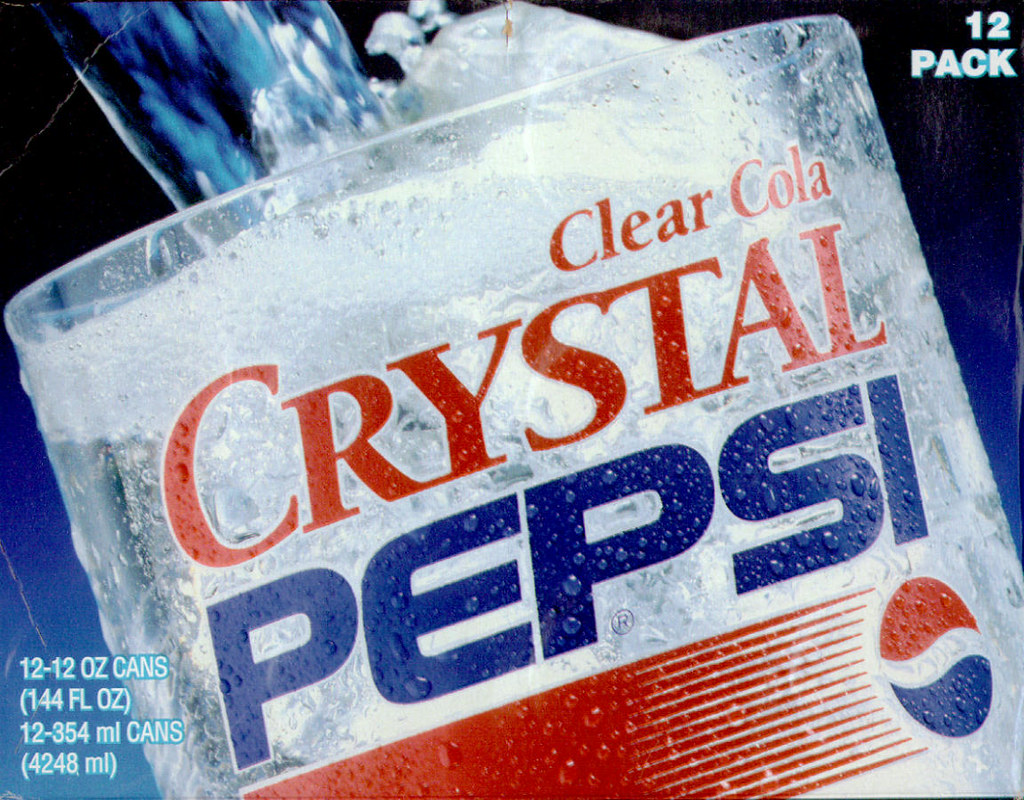
The launch of Pepsi Crystal in 1992 represents a case of marketing failure that can be examined in detail to understand the challenges faced by companies in positioning new products in the market.
Pepsi introduced Crystal Pepsi as a transparent drink without artificial coloring, aiming to capitalize on the idea of purity and clarity. The company hoped that Crystal Pepsi’s novelty and image of freshness would attract consumers, offering them an intriguing alternative to traditional dark colas.
From a marketing perspective, Pepsi has invested considerable resources in promoting Crystal Pepsi. Bold advertising campaigns were created to arouse interest and curiosity among consumers. TV commercials showed people sipping the drink in cool, modern locations, emphasizing the transparency and uniqueness of the product.
However, despite marketing efforts, Crystal Pepsi turned out to be a commercial failure. There are several reasons that may explain this failure:
- Failure to understand the audience: Despite eye-catching advertising, Pepsi may not have fully understood the preferences and consumption habits of its target consumers. The novelty of a transparent drink may not have been convincing enough to push consumers to change their cola consumption habits.
- Ambiguity in product positioning: It is unclear whether Pepsi has positioned Crystal Pepsi as a healthier alternative to traditional colas or simply as an aesthetic novelty. This lack of clarity in product positioning may have confused consumers and weakened its market appeal.
- Consumer expectations not met: Despite its transparency and lack of artificial coloring, Crystal Pepsi did not offer a significantly different taste than other beverages in the cola category. Consumers may have been waiting for a radically new and surprising taste experience that Crystal Pepsi failed to provide.
In conclusion, the case of Crystal Pepsi highlights the importance for companies to thoroughly understand their target audience, clearly communicate the unique value of the product, and deliver an experience that meets consumer expectations. Without a thorough understanding of these marketing dynamics, even an innovative product can fail in the marketplace.


